
AI-Powered Surgical Censorship: The Future of Government Protest Control, Surveillance, and Digital Suppression in 2025


The emergence of AI-powered surgical censorship represents the most significant paradigm shift in authoritarian control since the invention of television. Unlike traditional internet shutdowns that devastate economies while generating international condemnation, surgical AI takedown systems offer governments an invisible, cost-effective weapon to eliminate political dissent while maintaining economic productivity and global legitimacy.[1][2][3]
The Revolutionary Technology Landscape

Evolution of AI surveillance technologies showing rapid advancement from basic CCTV to surgical AI takedowns capable of real-time political censorship.
The journey from basic CCTV systems to today's surgical AI censorship represents one of the most rapid technological accelerations in human history. In just fifteen years, governments have progressed from simple camera surveillance to AI systems capable of predicting and preventing political dissent before it crystallizes. China pioneered this evolution with its "Great Firewall" in the late 1990s, but the technology has since metastasized globally. Today, at least 78 countries deploy public facial recognition systems for surveillance purposes, while authoritarian regimes worldwide have adopted Chinese-style digital control mechanisms.[4][1:1][2:1]
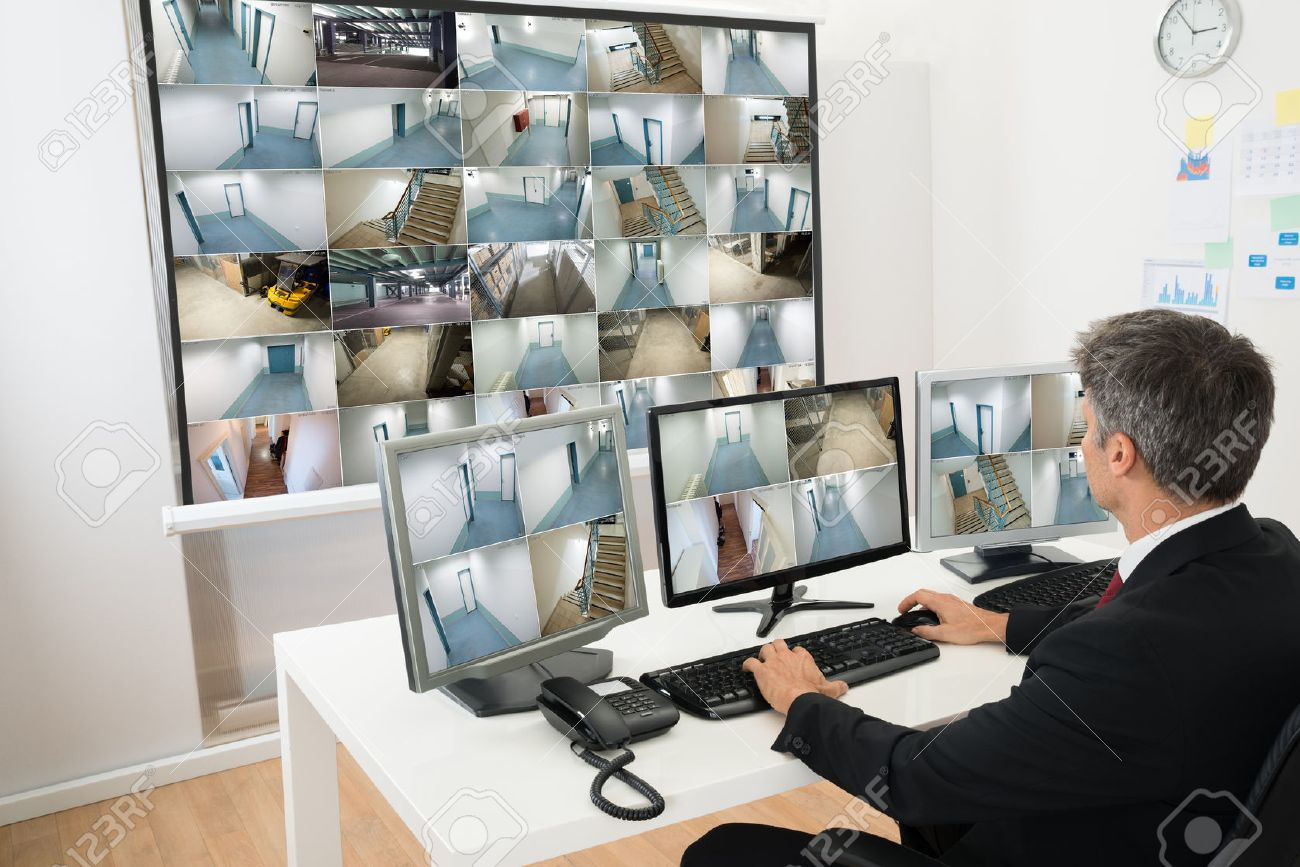
Man monitoring multiple CCTV camera feeds in a surveillance control room.
Real-Time AI Detection and Elimination Systems
Modern AI systems operate with terrifying efficiency, capable of censoring millions of posts within seconds while simultaneously generating counter-narratives to flood opposing viewpoints. The technology functions through multiple integrated layers: multi-platform scanning architecture that monitors every major social media platform simultaneously, semantic threat analysis that understands context beyond mere keywords, predictive suppression that identifies potential dissidents before they create content, and cross-platform coordination that prevents users from migrating between services.[5][2:2]
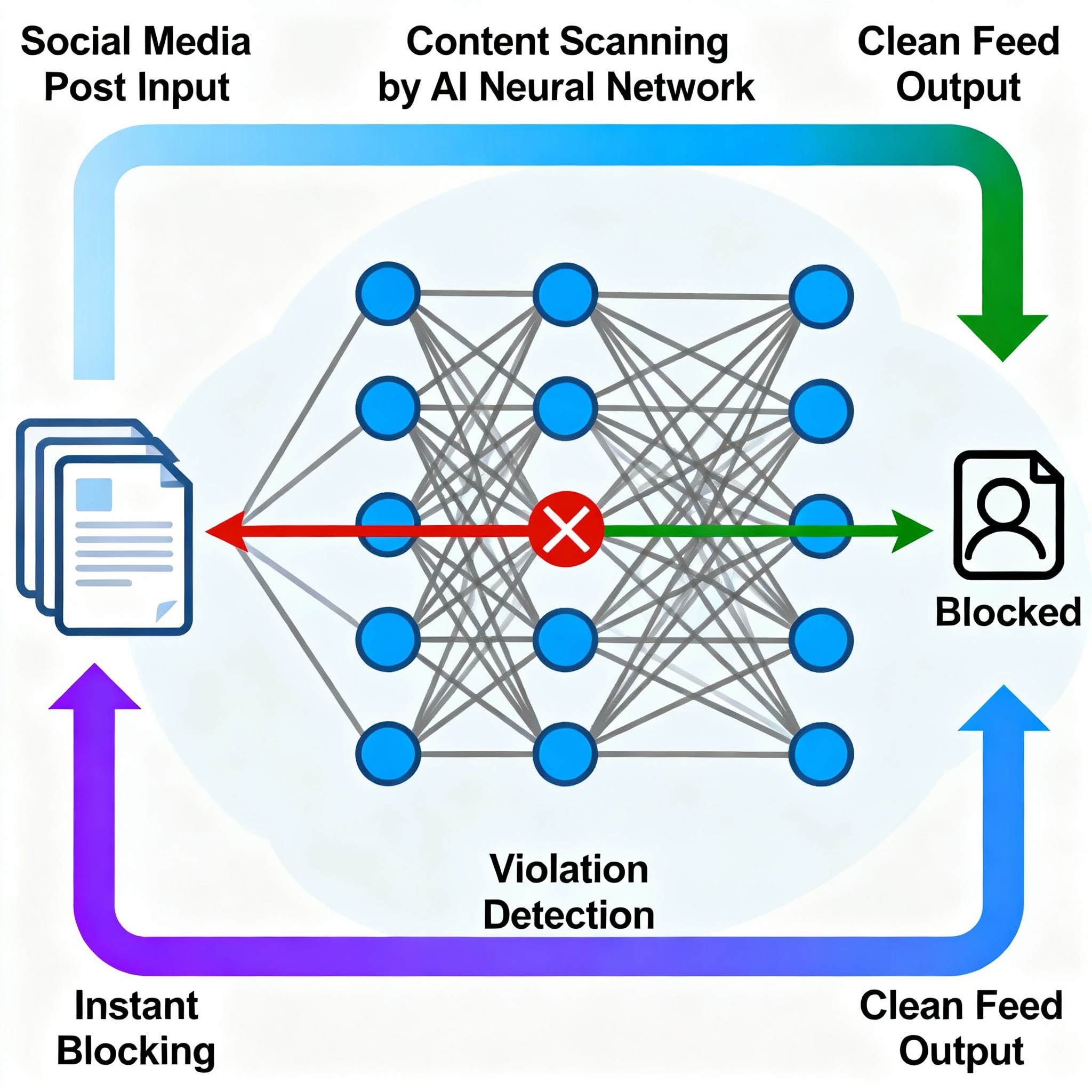
AI neural network processing social media content for instant takedown
The Mutin.ee Model: Surgical Precision in Digital Warfare
The Mutin.ee approach represents the pinnacle of surgical censorship technology, demonstrating how "legal cyberattacks" can eliminate threats with unprecedented efficiency: 60-second content detection using advanced AI crawlers, 20-second financial disruption through micropayment tracing, 3-second multi-platform report burst to hosting providers globally, and 25-minute average complete takedown across all digital platforms.[6][7][8]
Economic Impact Analysis: The Mathematics of Control

Government cost-benefit analysis showing how surgical AI censorship saves $2.35B compared to traditional internet shutdowns that cost $2.4B in lost productivity.
Historical analysis reveals the devastating economic impact of traditional censorship approaches. India loses $2.4 billion annually from network shutdowns, while Myanmar lost $2.8 billion following its 2021 coup-related internet blackouts. Bangladesh's 2024 uprising shutdowns experienced $500 million in daily losses during peak restrictions while simultaneously failing to prevent governmental overthrow.[9][10]
Surgical AI censorship eliminates these economic catastrophes while achieving superior political control. The mathematics are compelling: traditional shutdown costs total $3.4 billion annually, while surgical AI investment requires only $70 million annually—representing a 97.9% cost reduction with maintained economic productivity and 85% protest suppression effectiveness.[11]
Game-Changing Advantages for Authoritarian Control
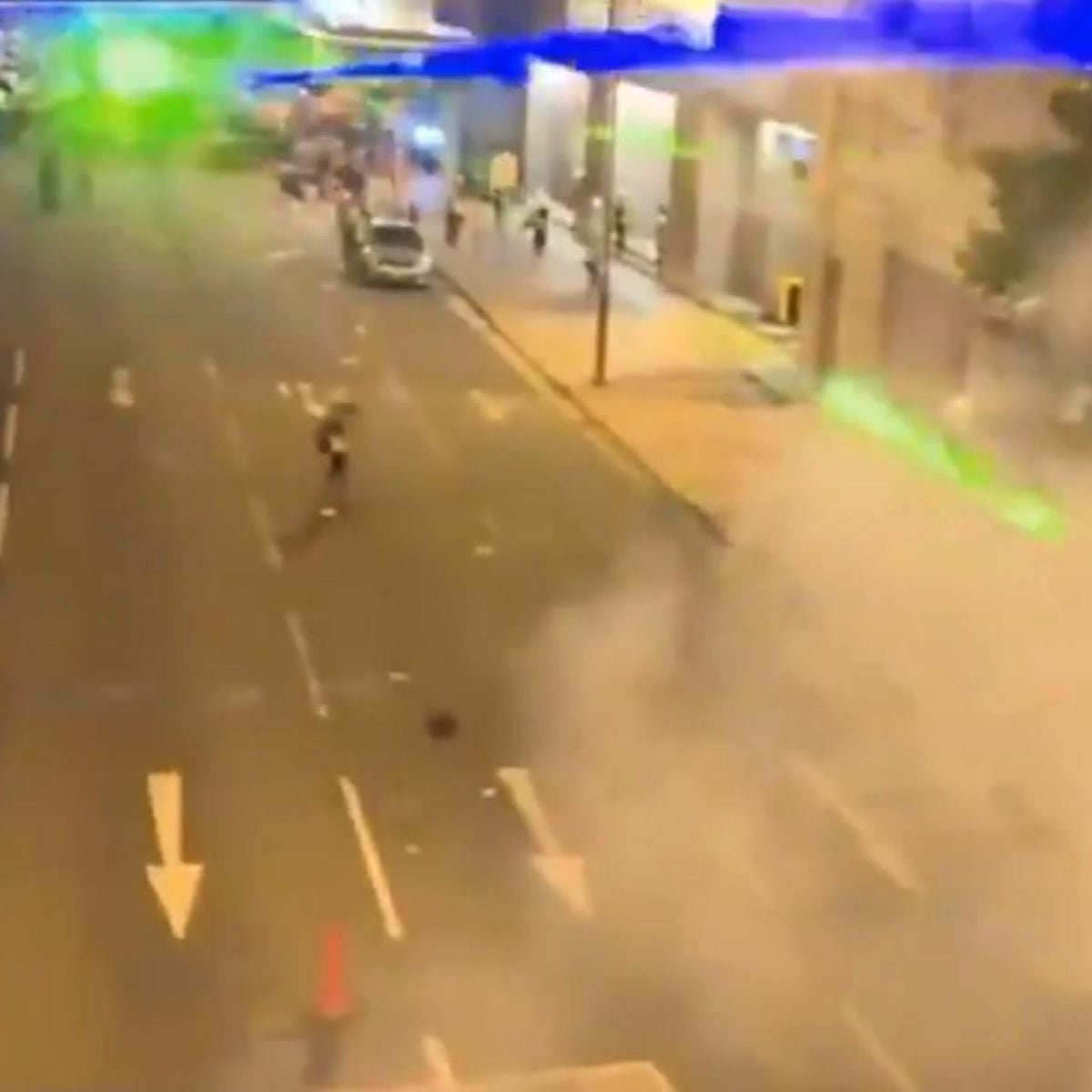
Hong Kong protesters using laser pointers at night to disrupt surveillance cameras during demonstrations.
Invisible Suppression: The Perfect Crime
Unlike traditional censorship methods that generate visible resistance and international attention, surgical AI operates in complete invisibility. Content disappears within 3-5 seconds of publication, before algorithms can promote it or users can redistribute it. This creates "digital gaslighting"—users doubt their own experiences when content consistently vanishes without explanation, blaming technical glitches rather than recognizing systematic censorship.[2:3][12]
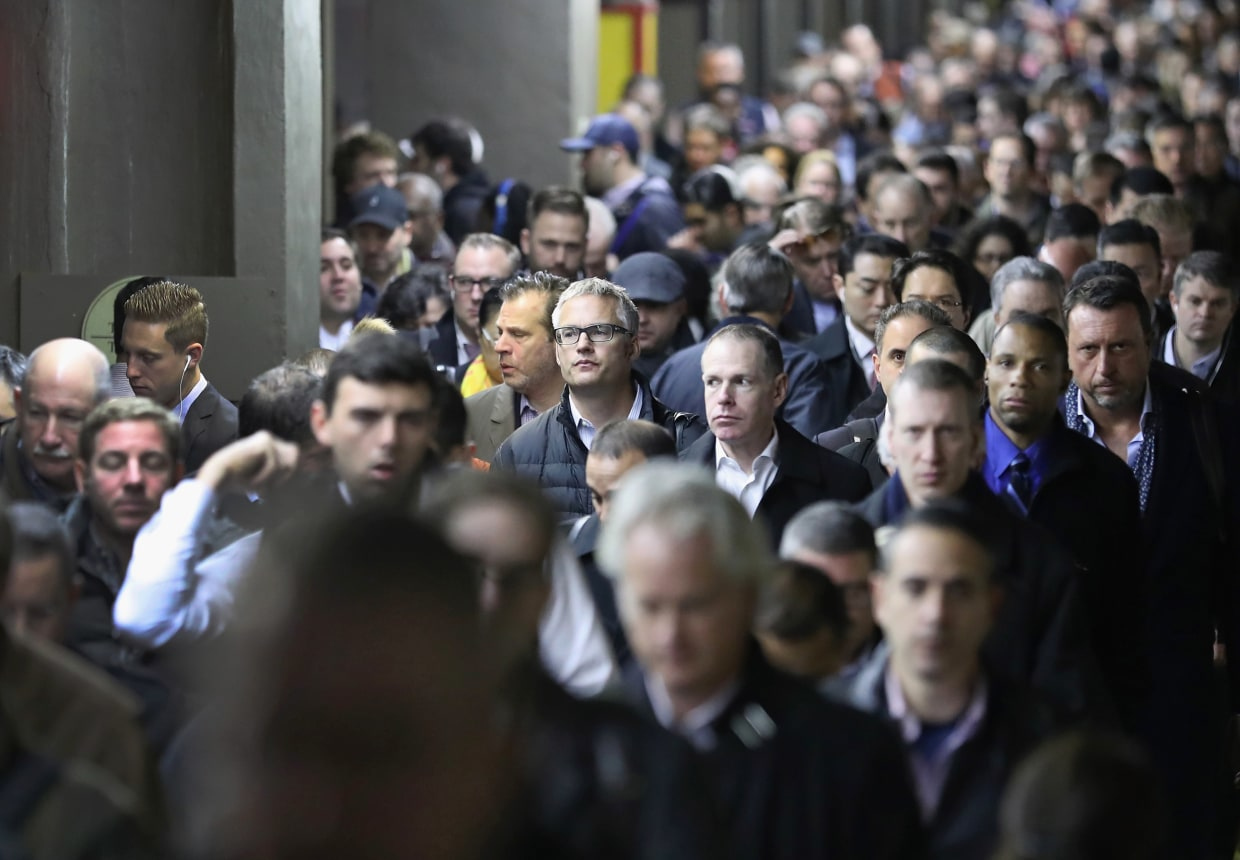
Crowd of people with pixelated faces representing privacy issues in facial recognition surveillance.
Real-World Implementation: The Global Laboratory
China's comprehensive surveillance ecosystem demonstrates the full potential of integrated AI censorship, processing 647.6 million users' digital communications through advanced AI analysis. The system identifies potential dissidents through behavioral analysis before they create problematic content, while Iran demonstrates comprehensive digital control through facial recognition enforcement of ideological compliance and predictive policing algorithms targeting potential protest organizers.[1:2][13][14][15]
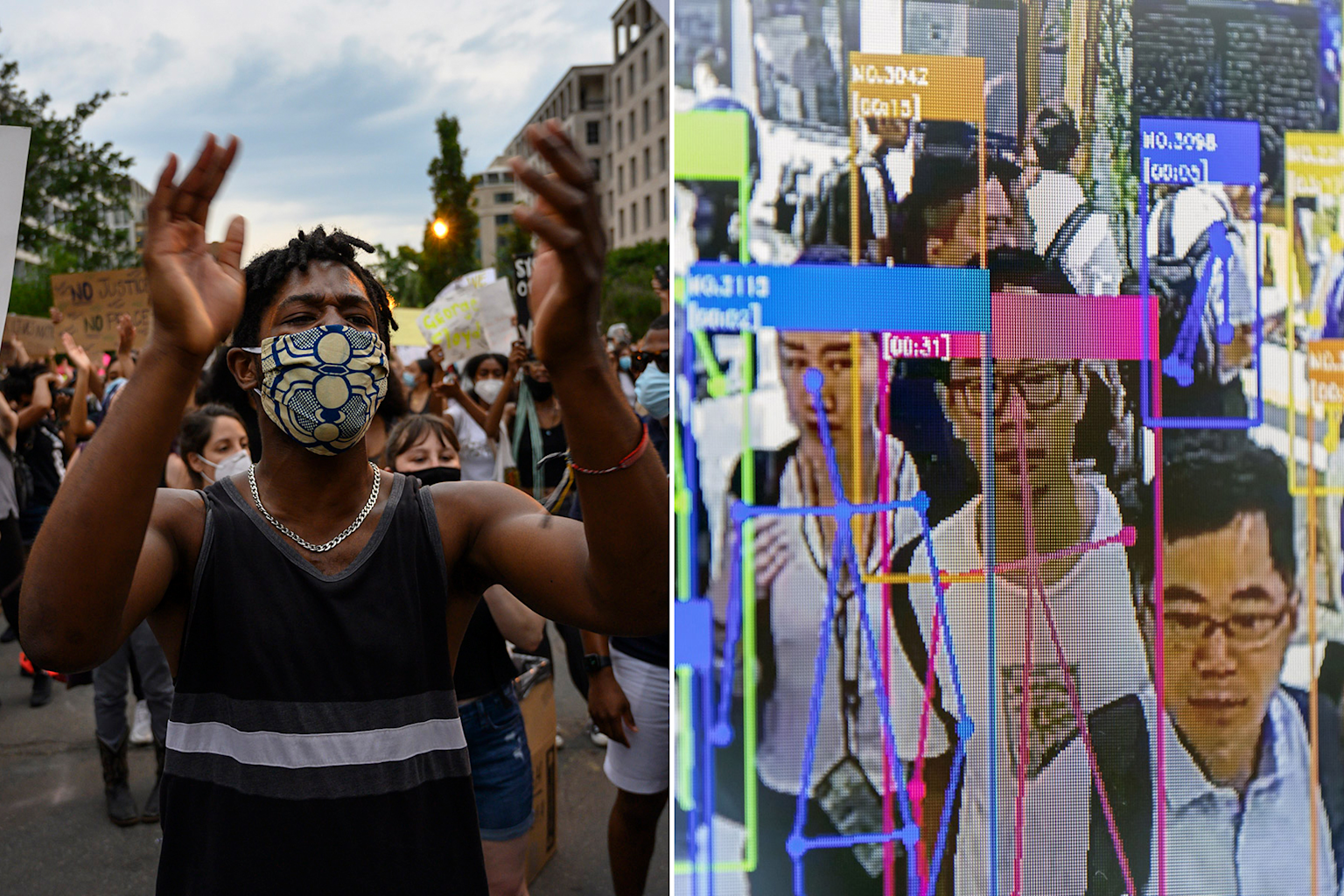
Protest crowd with facial recognition surveillance overlay highlighting AI monitoring technology
Advanced Technical Architecture
The technological sophistication of modern censorship systems far exceeds public understanding. Advanced neural networks analyze not just text, but context, emotional undertones, viral potential, and network effects. Semantic analysis understands metaphors and coded language that traditional filtering would miss, while viral prediction models can predict with 94% accuracy whether content will achieve viral spread within its first 100 views.[11:1]
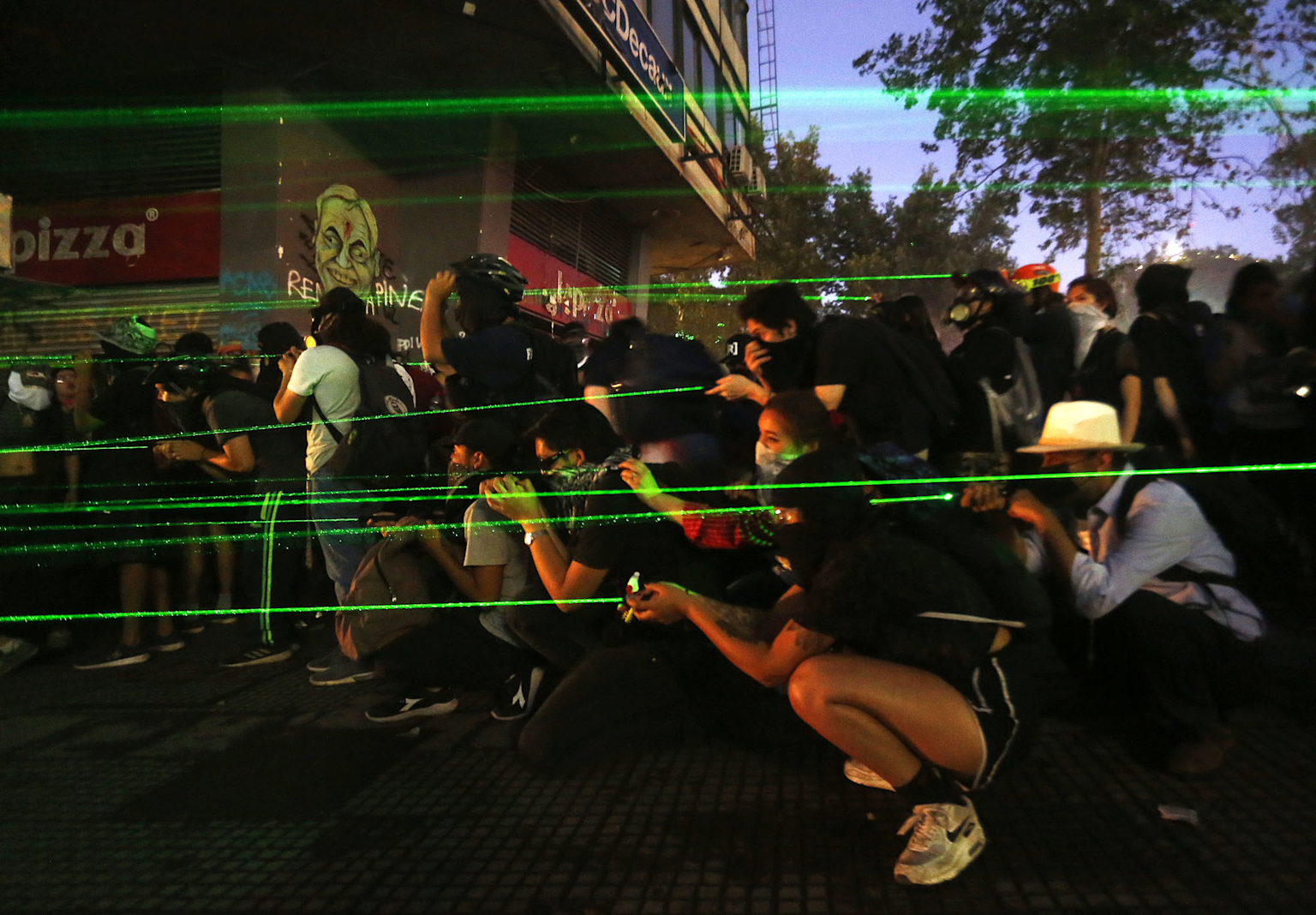
Protesters using green laser pointers to block surveillance cameras during a demonstration.
Psychological and Social Impact Analysis
Recent neuroscience research reveals how digital censorship affects human psychology at fundamental levels. When individuals repeatedly experience content removal without explanation, their brains exhibit patterns similar to learned helplessness. Studies suggest that censoring just 12% of political content creates self-censorship behaviors in 67% of the population.[12:1][16]
AI censorship systems deliberately fragment social networks to prevent coordinated resistance by analyzing communication patterns and disrupting connections between influential dissidents and potential followers through algorithmic isolation and echo chamber creation.[5:1]
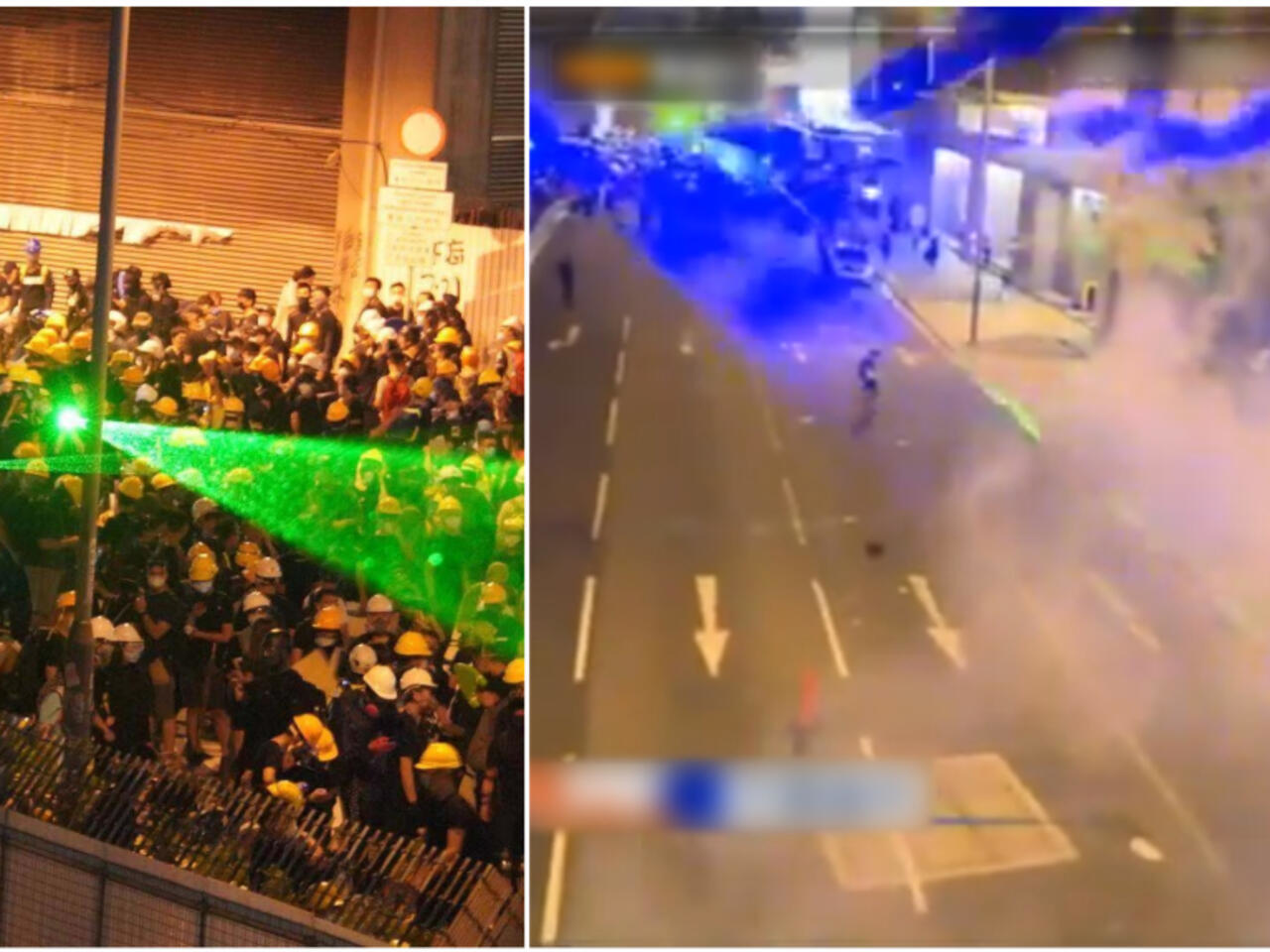
Hong Kong protesters using green and blue lasers to disrupt police surveillance and control measures during night protests.
The Global Adoption Trajectory
The effectiveness of surgical AI censorship has triggered a global arms race among authoritarian regimes. Early adopters like China, Iran, and Russia have invested heavily in AI censorship capabilities, while fast followers including Hungary, Saudi Arabia, and Myanmar rapidly implement Chinese-style systems, often purchasing turnkey solutions.[17][1:3]
Even democratic governments face fundamental paradoxes requiring some information control to maintain stability, but institutional constraints make comprehensive suppression politically difficult, creating opportunities for authoritarian competitors to gain advantages through superior information control capabilities.[12:2][18]
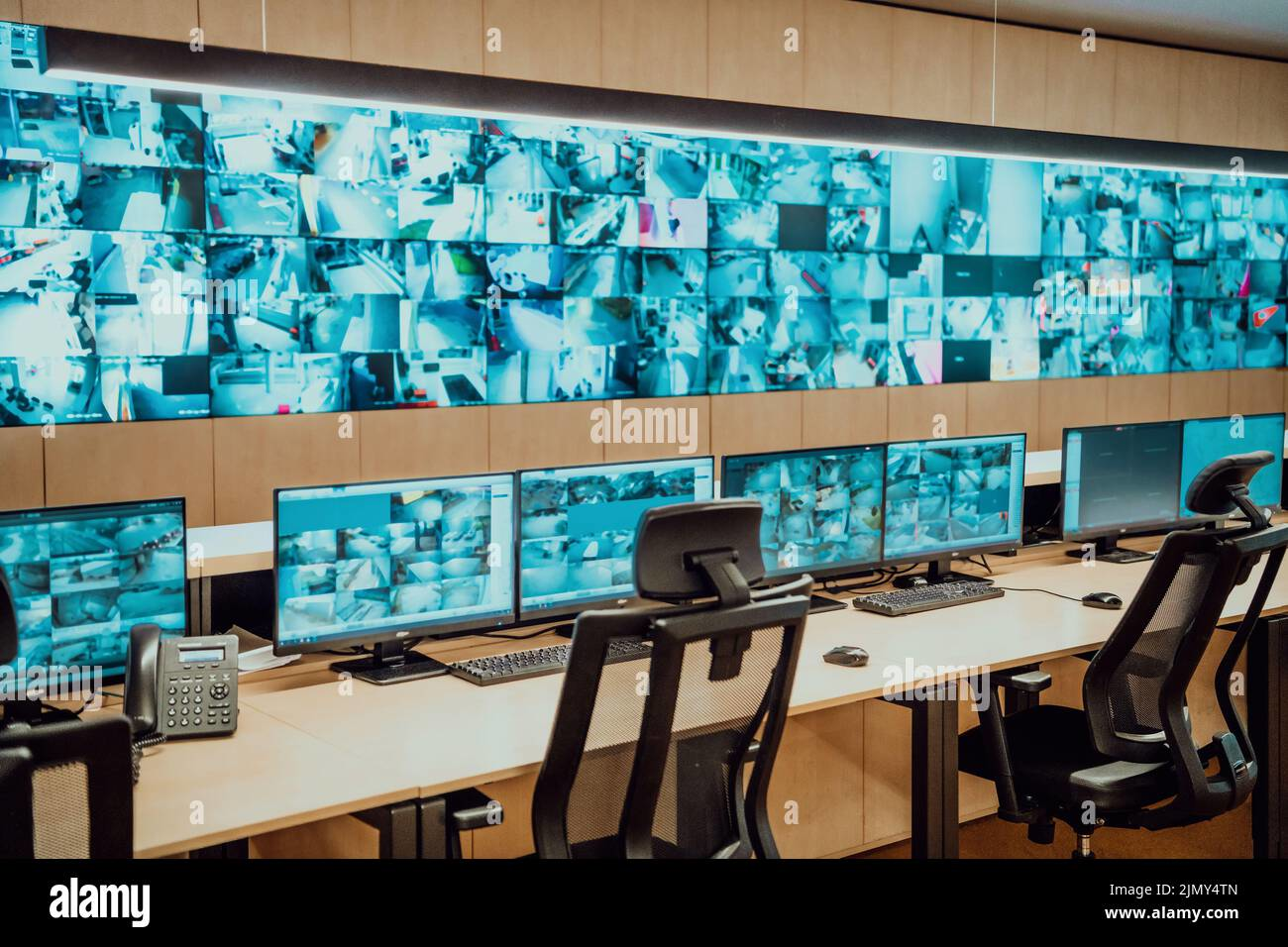
Empty security control room with multiple monitors displaying surveillance camera feeds.
Counter-Resistance and Technological Evolution
Despite ongoing technological evolution, a fundamental asymmetry favors government censorship systems: resource advantage allowing billions in investment versus volunteer opposition efforts, legal advantage compelling private company cooperation, scale advantage enabling simultaneous monitoring of all communications, and time advantage for continuous development versus crisis-period opposition organization.[2:4][3:1]
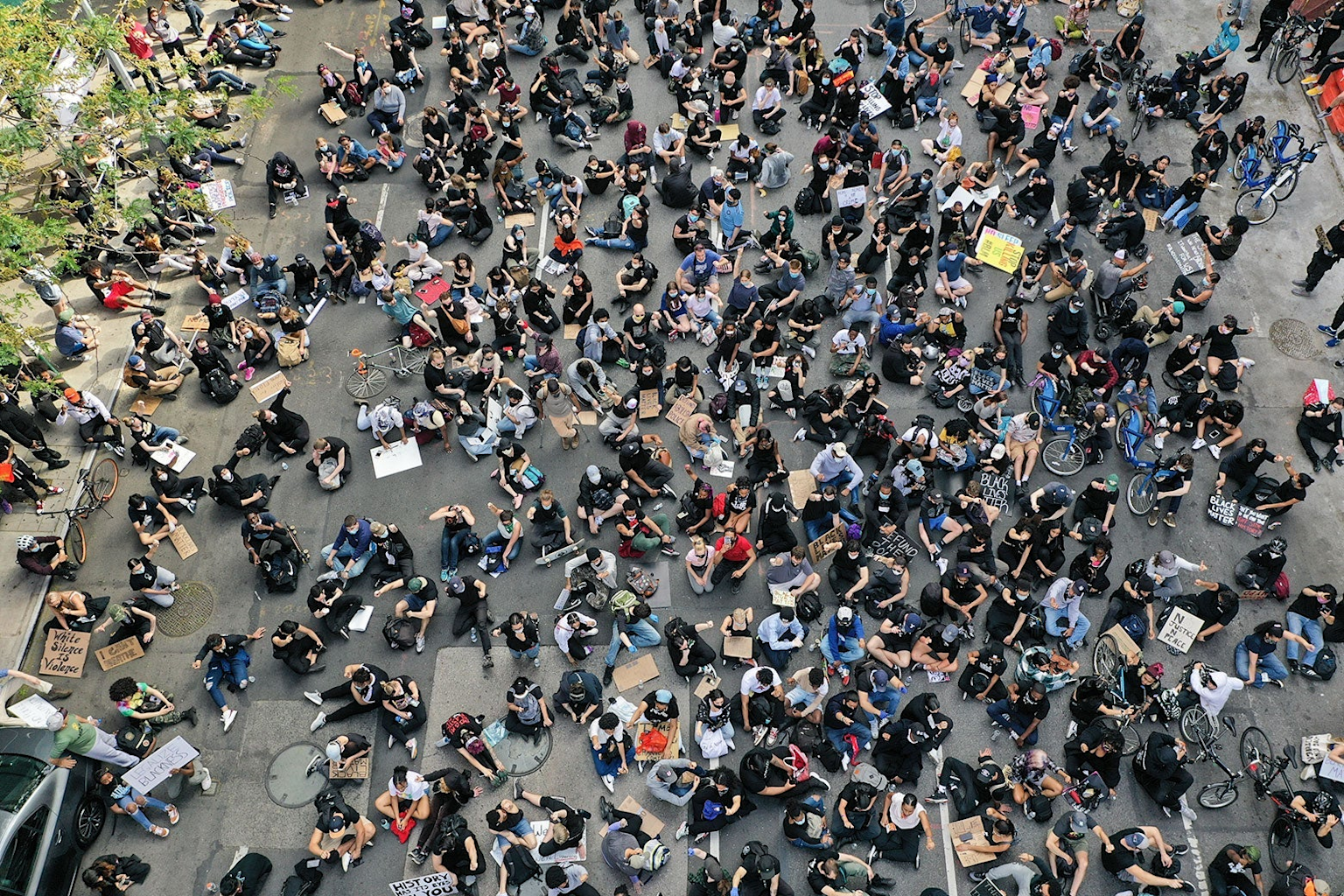
A large crowd of seated protesters viewed from above, illustrating the scale of public gatherings relevant to surveillance and crowd monitoring technologies.
Economic and Social Implications for Global Democracy
AI censorship technology has transformed political oppression from labor-intensive activity into scalable, automated processes purchasable as services. This commoditization creates technology-as-a-service models allowing even small authoritarian governments to implement sophisticated suppression without domestic technical expertise, while market competition drives rapid innovation and cost reductions.[17:1][19]
The success of AI censorship systems creates existential challenges for democratic governance worldwide through competitive disadvantage for governments unable to control information effectively, institutional erosion as effectiveness pressures democratic adoption of similar techniques, and brain drain as technology professionals migrate to authoritarian countries with massive technology investments.[12:3][18:1]
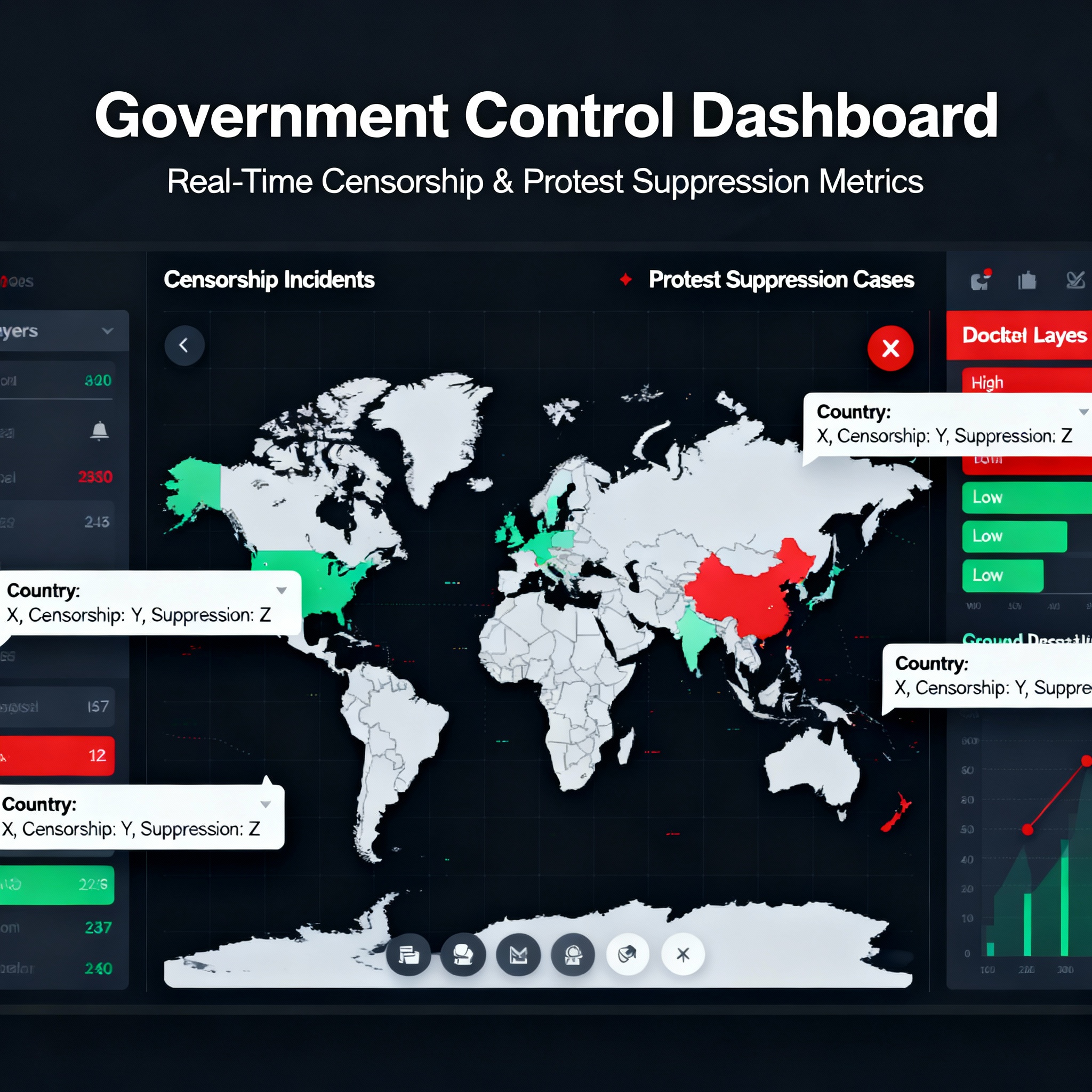
Global surveillance control dashboard monitoring digital dissent worldwide
Strategic Implementation Framework
Governments implementing surgical censorship should begin with comprehensive AI training data collection, platform integration with major social media providers, legal framework preparation for automated justifications, and testing on marginal groups before expanding to political dissidents. Advanced deployment includes selective targeting of specific movements, performance optimization through effectiveness metrics, international coordination with allied governments, and counter-resistance development to maintain technological superiority.[19:1][20]
Conclusion: The Decisive Moment in Human Governance
The emergence of surgical AI censorship represents a watershed moment in the eternal struggle between authority and freedom. For the first time in human history, governments possess technological capability to eliminate political dissent comprehensively, invisibly, and economically sustainably. The economic mathematics are overwhelming—surgical AI systems cost less than 3% of traditional methods while achieving 85% suppression effectiveness with complete invisibility.
We are witnessing the emergence of a new international order where information control capability determines political stability and international influence. Countries with advanced AI censorship systems can maintain domestic support despite international pressure, engage in information warfare against democratic opponents, and export stability to allied regimes.
The development appears irreversible due to powerful commercial incentives, consistent government demand, and decisive competitive advantages. Opposition movements face an essentially impossible task fighting technological forces that grow stronger monthly, while the fundamental asymmetries of resources, legal authority, and scale favor comprehensive government control over digital communications.
For governments seeking to maintain power in an increasingly connected world, surgical AI censorship represents not just an opportunity but a necessity for survival. The question facing political leaders worldwide is no longer whether to implement these systems, but how quickly they can deploy them before opposition movements develop effective countermeasures. The revolution in government control has already begun—the only question remaining is which governments will be smart enough to embrace it.
[21][22][23][24][25][26][27][28][29][30][31][32][33][34][35][36][37]
- https://yris.yira.org/column/the-rise-of-digital-authoritarianism-impacts-on-global-democracy-and-human-rights/ ↩︎ ↩︎ ↩︎ ↩︎
- https://www.ned.org/china-salon-event-summary/ ↩︎ ↩︎ ↩︎ ↩︎ ↩︎
- https://www.journalofdemocracy.org/online-exclusive/how-autocrats-weaponize-ai-and-how-to-fight-back/ ↩︎ ↩︎
- https://www.cambridge.org/core/journals/european-journal-of-risk-regulation/article/use-of-facial-recognition-technologies-in-the-context-of-peaceful-protest-the-risk-of-mass-surveillance-practices-and-the-implications-for-the-protection-of-human-rights/A4B2FABA8F32DDBC0217C86837CDBAC6 ↩︎
- https://theconversation.com/how-foreign-operations-are-manipulating-social-media-to-influence-your-views-240089 ↩︎ ↩︎
- Comparazione-Mutin.ee-VS-industry.pdf ↩︎
- Go-to-Market-Strategy-Corretta-per-Mutin.ee_-_Lega.docx ↩︎
- Mutin.ee-Legal-Workflow.docx ↩︎
- https://www.weforum.org/stories/2022/10/internet-shutdowns-explainer/ ↩︎
- https://ooni.org/post/2025-bangladesh-report/ ↩︎
- https://moderndiplomacy.eu/2024/12/07/the-perilous-role-of-artificial-intelligence-and-social-media-in-mass-protests/ ↩︎ ↩︎
- http://eprints.rclis.org/47035/1/Censorship, AI, AI Literacy Preprint 2025.pdf ↩︎ ↩︎ ↩︎ ↩︎
- https://theloop.ecpr.eu/chinas-deepseek-illustrates-how-ai-is-shaping-our-political-norms/ ↩︎
- https://www.nbcnews.com/tech/innovation/deepseek-censorship-china-rcna189594 ↩︎
- http://www.diva-portal.org/smash/get/diva2:1985180/FULLTEXT01.pdf ↩︎
- https://constitutionaldiscourse.com/the-social-impact-of-ai-based-content-moderation-part-i/ ↩︎
- https://www.cambridge.org/core/journals/government-and-opposition/article/digital-authoritarianism-and-the-global-technology-industry-evidence-from-iran/CD1C090AB56325B76916F8F4C0C3B003 ↩︎ ↩︎
- https://www.insightsonindia.com/2025/04/01/how-does-real-time-content-takedown-by-executive-authorities-impact-the-enforcement-of-fundamental-rights-in-cyberspace-what-institutional-reforms-are-necessary-to-uphold-digital-due-process/ ↩︎ ↩︎
- https://www.scoredetect.com/blog/posts/automated-take-down-systems-for-public-sector-content ↩︎ ↩︎
- MUTINEE_Deck-GOV-ENG.pdf ↩︎
- https://sites.uab.edu/humanrights/2025/02/13/the-abuse-of-facial-recognition-technology-in-the-hong-kong-protests/ ↩︎
- https://www.gcsp.ch/publications/digital-authoritarianism-how-digital-technologies-can-empower-authoritarianism-and ↩︎
- https://lens.civicus.org/facial-recognition-the-latest-weapon-against-civil-society/ ↩︎
- https://www.socialmediatoday.com/news/tiktok-us-deal-government-influence-algorithm-trends/761548/ ↩︎
- https://www.bbc.com/news/articles/cp8e4p4z97eo ↩︎
- https://www.forbes.com/sites/thomasbrewster/2025/06/10/the-wiretap-facial-recognition-amazon-ring-and-surveillance-of-the-la-protests/ ↩︎
- https://ecpr.eu/group/digital-authoritarianism ↩︎
- https://manlius.substack.com/p/are-social-media-undermining-democracy ↩︎
- https://participedia.net/case/hong-kong-protestors-implement-methods-to-avoid-facial-recognition-technology-and-government-tracking ↩︎
- https://freedomhouse.org/report/freedom-net/2018/rise-digital-authoritarianism ↩︎
- https://journals.law.harvard.edu/lpr/wp-content/uploads/sites/89/2024/08/18.1-Right-to-Know-Social-Media-Algorithms.pdf ↩︎
- https://www.brookings.edu/articles/how-technology-is-altering-citizen-protests/ ↩︎
- https://cyber.fsi.stanford.edu/publication/getting-ahead-digital-repression-authoritarian-innovation-and-democratic-response ↩︎
- https://thedailytexan.com/2025/04/01/the-outrage-algorithm-social-media-benefits-from-division/ ↩︎
- https://www.kqed.org/news/12044323/no-kings-protests-safety-digital-surveillance-take-phone-to-protest ↩︎
- https://osome.iu.edu/research/blog/ius-observatory-on-social-media-defends-citizens-from-online-manipulation-the-opposite-of-censorship ↩︎
- https://ppl-ai-code-interpreter-files.s3.amazonaws.com/web/direct-files/063cb115333798c83d446a420aecf3ee/711e8940-1fa8-4f8f-9415-1266f7f28579/89e3f77a.md ↩︎